Assignment of Benefit changes: What it means for practices
June 9, 2026
Healthcare in Australia is becoming increasingly digital, but many administrative processes have struggled to keep pace. Behind the scenes of every consultation sits a system that relies heavily on trust. Patients expect their information to be handled securely and their Medicare billing to be managed correctly.
From 1 July 2026, this system is being updated. Changes to the Medicare Assignment of Benefits (AoB) process will reshape how bulk billing consent is captured and stored in practices. While framed as a Medicare compliance update, the AoB changes also signal a broader shift toward more transparent, consistent, and digitally enabled healthcare administration in Australia.
For many practices, the Medicare AoB changes 2026 will feel like another layer of administration at first. But beneath that sits a clear path away from paper-based workflows and toward simpler, digital consent processes.
What are the Medicare Assignment of Benefits (AoB) changes?
The Department of Health, Disability and Ageing (DoHDA) is modernising Medicare billing for bulk billed and simplified billing services through amendments to the Health Insurance Act 1973. At its core, bulk billing still requires patient agreement to assign their Medicare benefit to the provider, with that benefit treated as full payment for the service.
The Assignment of Benefits (AoB) process sets out how this consent is captured. From July 2026, updated Medicare AoB requirements will change how bulk billing consent is documented, stored, and verified.
Key changes from July 2026 include:
Verbal consent will no longer be accepted, including for telehealth services.
Consent can be given before or after a service, but must be in place before a Medicare claim is submitted.
Approved or prescribed forms will no longer be required if all mandatory information is included.
Practitioner signatures will no longer be required.
Patient or authorised representative consent must be identifiable and electronically verifiable.
AoB records must be retained for at least two years and provided to patients on request.
Why Medicare is moving beyond paper consent
For years, consent for bulk billed Medicare services has been managed through paper-based forms and manual administrative processes. While these approaches have been long established, they are increasingly being complemented by more efficient digital workflows.
As healthcare delivery becomes more digitally enabled, paper-based processes can add avoidable steps such as printing, scanning, filing, and physical storage. They may also make it more difficult to consistently access or verify consent records when required.
The Medicare AoB changes aim to bring consent processes in line with modern digital health standards. By improving how consent is recorded and stored, the updates support clearer documentation, stronger governance, and more reliable access to records across the system.
What this means for your practice
For practices, the Medicare AoB changes will require planning, including updates to systems, workflows, and staff training to support consistent and compliant consent capture.
While this creates short-term adjustment, it also presents an opportunity to improve how consent is managed. Embedding consent into clinical systems can reduce duplication, streamline workflows, and create a more consistent Medicare billing process.
Consent is a routine part of every patient interaction, but paper-based systems add multiple manual steps that accumulate over time. Digital workflows help reduce this burden, making records easier to capture, access, and manage for compliance and audit purposes.
Practices will also need to ensure consent remains accessible for all patients, including those less confident with digital tools or who prefer non-digital options.
These implementation challenges have been noted by the Royal Australian College of General Practitioners (RACGP), particularly around administrative burden and the need for clear guidance during transition. While some adjustment is expected, the changes support a longer-term shift toward more efficient and consistent processes across general practice.
What patients can expect
From a patient perspective, the Medicare AoB changes are primarily centred on improved transparency, clarity, and accessibility of consent.
Digital and standardised consent processes are intended to provide clearer records of what patients have agreed to, and when consent was given. This reduces reliance on paper-based forms and improves the ease with which information can be accessed when needed.
In practice, patients are likely to experience a more consistent and streamlined consent process across providers, particularly as digital systems become more integrated into everyday care delivery.
At the same time, maintaining flexible and accessible non-digital pathways will remain an important part of ensuring the system remains inclusive and patient-centred.
Frequently Asked Questions
What is an Assignment of Benefit (AoB)?
An Assignment of Benefit (AoB) is the process where a patient agrees to assign their Medicare benefit directly to a healthcare provider, allowing the provider to receive the Medicare rebate as full payment for a bulk billed service. This agreement confirms the patient’s consent for the provider to bill Medicare on their behalf instead of the patient paying upfront and claiming a rebate themselves.
What are the Medicare Assignment of Benefit (AoB) changes?
From 1 July 2026, the Medicare Assignment of Benefit (AoB) changes update how patient consent for bulk billed services is captured and recorded. Verbal consent will no longer be accepted, and consent must be clearly documented before a Medicare claim is submitted. Practitioner signatures will no longer be required, approved forms are no longer mandatory if required information is included, and records must be retained for at least two years with copies provided to patients on request.
When do the Medicare Assignment of Benefit changes come into effect?
The updated Medicare Assignment of Benefits requirements take effect from 1 July 2026.
How do the Assignment of Benefit changes affect bulk billing?
The changes do not alter the bulk billing process itself. Instead, they focus on how patient consent for bulk billed services is obtained, recorded, and stored, with greater emphasis on clear written or electronic documentation.
Why is Medicare changing the Assignment of Benefit process?
The changes are designed to modernise consent management, reduce reliance on paper-based processes, improve record keeping, and align Medicare administration with contemporary digital healthcare practices.
What do practices need to do to prepare?
Practices should review their current consent processes, assess whether their clinical and practice management systems support compliant consent capture, update workflows where needed, and ensure staff understand the new requirements before 1 July 2026.
How does MediRecords support the Assignment of Benefit change?
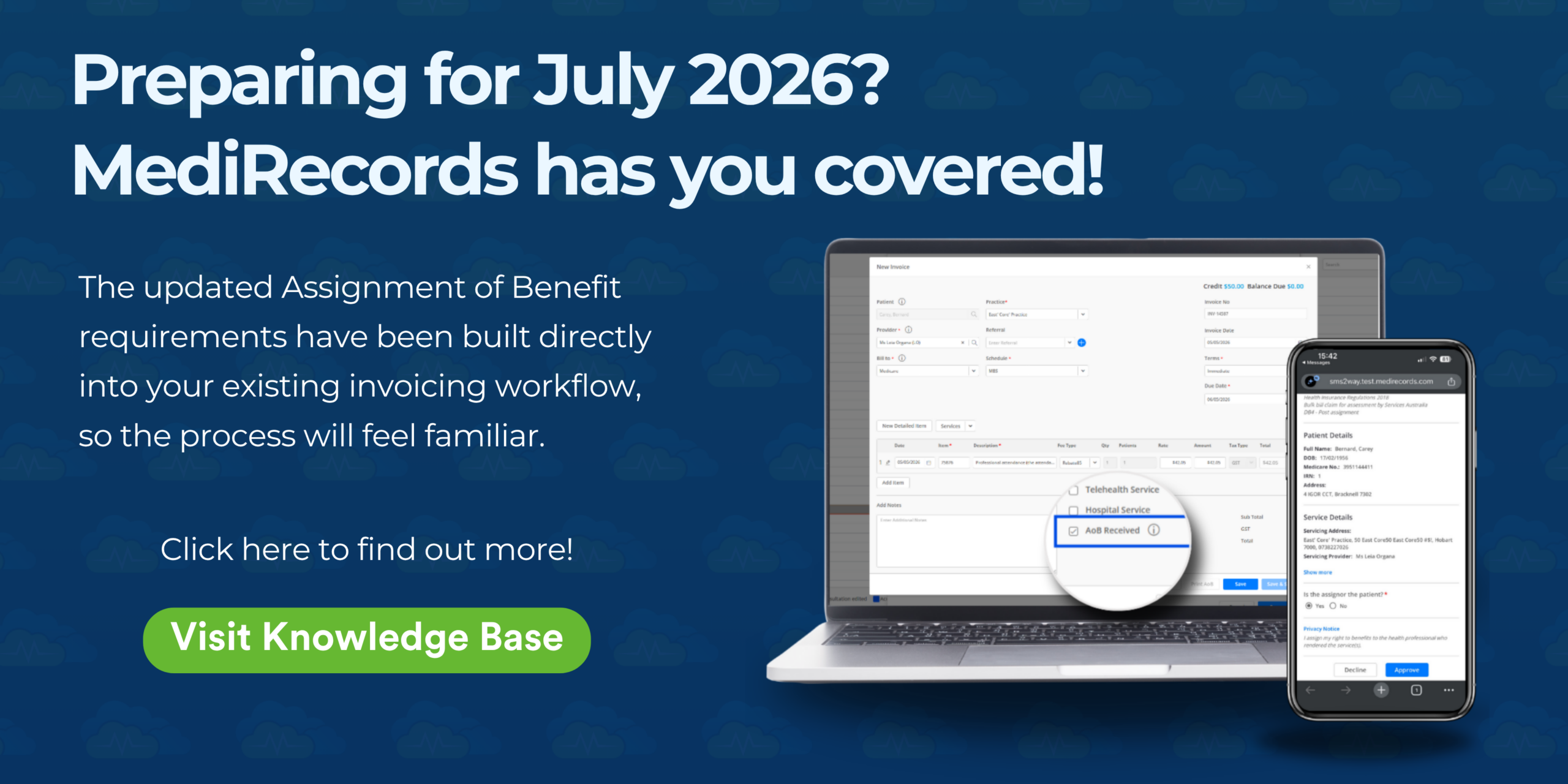
We have built the updated AoB requirements directly into our customer’s existing invoicing workflow, so the process will feel familiar. To learn more, visit our Knowledge Base article, here.