

Skip to content

Pulse Check: When caring becomes dangerous

Frustrated patient yells at a practice receptionist, who looks down at her clipboard at the reception counter.
Tim Pegler - Author, Journalist and Senior Business Development Manager at MediRecords

This article is the first in a new monthly series penned by Tim. 

Aggro, everywhere 

If you sit in a Victorian hospital and listen to the loudspeaker announcements, you’ll often hear ‘Code Grey’. Codes can vary across Australian hospitals, but Code Grey often means an unarmed person or patient is being aggressive, abusive or threatening. If you hear ‘Code Black’, it likely means a person is armed and/or has escalated to physical violence. 

You may hear Code Grey more frequently than ‘Code Blue’, which signifies a medical emergency. That’s alarming in a hospital setting and a clear sign occupational violence and aggression is significant safety issue, with consequences for healthcare staff, patients and visitors. 

According to Australian Institute of Health and Welfare (AIHW) research, assault is now the second leading cause of hospitalisation for injuries among healthcare workers. Assault-related hospitalisations among healthcare workers rose from 49 in 2015–16 to 126 in 2024–25, rising from 4.3 to 8.1 per 100,000 healthcare workers. 

Receptionist wearing a headset holds her forehead in frustration while working at her computer in a busy clinic.

Primary care, primary causes

The issue isn’t restricted to hospitals. GP clinics also regularly face the ire of cranky clients, with receptionists often exposed as the first point of contact.

A 2025 British Medical Journal international review of studies of violence and abuse toward general practice staff (including six Australian studies) found past-year rates for violence and abuse by patients and the public towards GP clinic staff ranged from 14% to 90%, while career-long estimates were from 18% to 91%. Long wait times and unmet patient demands were the most common catalysts for aggressive behaviours.

This is a new consideration for clinics when it comes to training practice personnel. Practice managers and front of house staff don’t just need to be confident in using practice management software, they may also need training in deescalating and managing patient aggression.

The big picture

Healthcare isn’t unique. Aggression is rising in other workplaces, such as retail, education, the public service and all levels of politics. But if we need a signpost to where we don’t want to go, the US looms large. A review of media reports of shootings in American hospitals between 2000 and 2024 found an overall incidence of 25.2 hospital-based shootings per year. Between 2012 and 2024 shootings increased by 8.4% per year, with an estimated 81 fatalities. The study, published in JAMA Network Open, concluded hospitals represented, “an intersection between broader national trends in workplace and firearm violence”.

Australia has fewer guns but we can take nothing for granted as the tide of aggression rises.

Link of the Month

With all the talk of AI anarchy, it’s nice to see robots getting good press. 

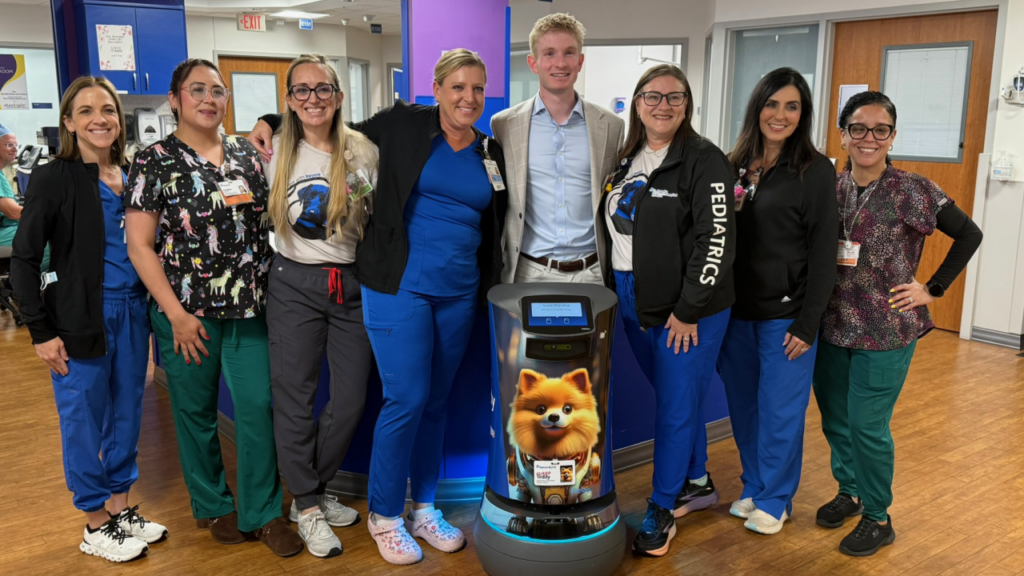
Australian hospitals already use robots for automated delivery of items such as linen; in this story a ‘robot dog’ couriers medications for paediatric patients. 

Anything that brings smiles to sick kids sounds like a winner to me.