
Predictions and peer pressure in the AI playground
January 21, 2026


by Tim Pegler
For a few years now I’ve dusted off my crystal ball each January, gazed into its misty depths, and asked, ‘What will change in digital health in the 12 months ahead?’
This year it felt pointless asking as all the omens point to obvious answers. I didn’t need to be psychic to predict AI and cyber security would dominate developments in healthcare in 2026.
And then the ground shifted, possibly seismically. AI giants OpenAI and Anthropic formally launched healthcare initiatives and the aftershocks have begun. So, hot on the heels of the announcements, let’s look at what the big five AI platforms are doing in health:
OpenAI’s ChatGPT
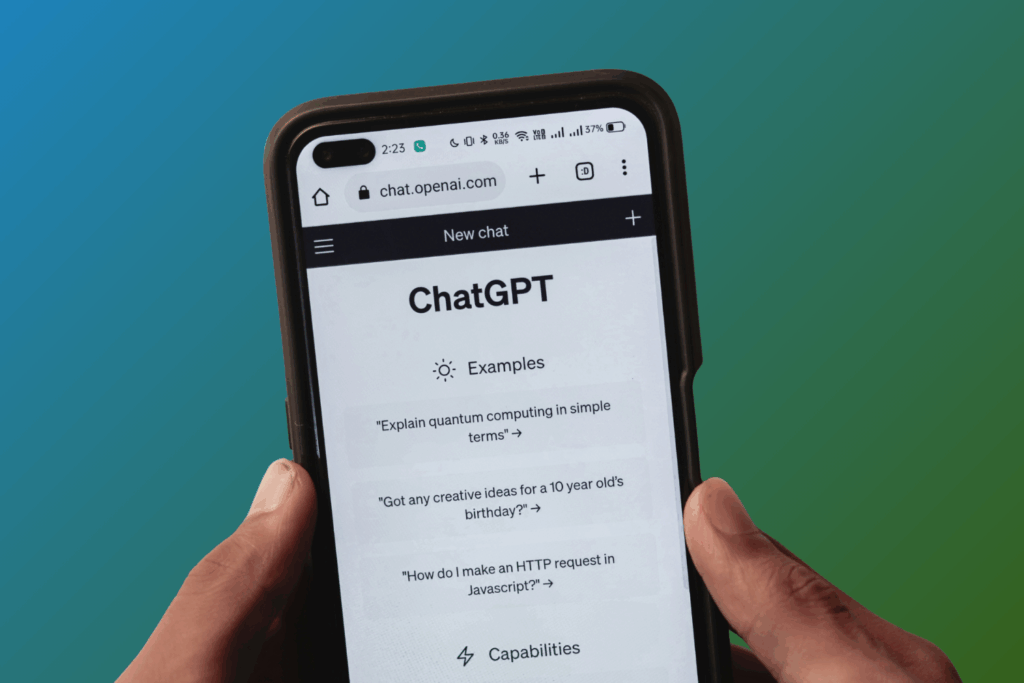
Watch how your friends and family get their health information now. If they’ve dumped Dr Google in favour of a ChatGP(T), they’re part of a mass migration. It’s estimated that 5% to 25% of ChatGPT searches now relate to healthcare, so it’s no surprise OpenAI is cementing its role in health.
OpenAI’s January 8 announcement said ChatGPT Health will be a consumer-facing information and assistance tool where you can upload results and ask questions, draft clinical documents, review research and summarise data. In the US, personal health records can be connected via middleware, to analyse progress. Major training tools, like MyFitnessPal and Peloton, are looking to integrate with ChatGPT.
For large healthcare organisations, ChatGPT for Healthcare promises a HIPAA-ready workspace, focused on administrative efficiency. It can be integrated with an Electronic Medical Record (EMR) to boost automation, clinical decision support and planning. Major hospitals are already proceeding to pilot implementations.
ChatGPT Health is available to a limited user group in Australia, with broader access likely from next month.
Anthropic’s Claude
Claude for Healthcare launched on January 11 with beta products for enterprise and consumers. At present, these are limited to US subscribers, with no timeline for entering the Australian market. On the consumer side, Apple and Android integrations will enable sharing of health histories, results, and wearable device data with Claude. Claude says this will enable detection of patterns, “more productive conversations with doctors” and humans who are better informed about their health.
At enterprise level, Claude is also HIPAA-ready and aligning with major databases such as PubMed, the international Classification of Diseases (ICD-10) and the US system detailing medical billing codes.
Microsoft’s Copilot
Microsoft announced its health AI push early and has the advantages of being pre-installed in many computers. Copilot for Health identifies as a consumer-friendly ‘AI Companion’ that draws on medical journals, especially Harvard Medical School resources. It can provide symptom and wellness information and point you toward nearby health services, (hopefully with available appointments).
At EMR level, Microsoft’s play is through Dragon Copilot for medical professionals (no known Australian release date) and enterprise documentation tools under the Microsoft for Healthcare banner.
Google’s Gemini
Google has research tools and enterprise cloud platforms in its armoury. The former includes Med-Gemini, which can assist with medical exam preparation, clinical reasoning and patient file analysis, and MedGemma which is used with diagnostic imaging, medical devices and other clinical documents. Finally, Personal Health LLM (looks like the marketing team haven’t got to this one yet) will coach consumers based on data from devices like Fitbit.
At enterprise level, Google has Vertex AI Search for Healthcare in EHR systems and MedLM for documentation, scribing and clinical coding. Hospitals using Google Workspace will likely use Google AI tools.
Google’s Health Connect is also promoting FHIR (Fast Healthcare Interoperability Resources) standards to improve interoperability of health information sources.
Beyond these initiatives, Google Health is a leader in deep dive medical research and drug development.
Perplexity
The other big AI player, best known for its comprehensive referencing, hasn’t announced a formal healthcare move. Partnered with large research libraries like Wiley, Perplexity promises an “AI research and productivity layer” but lacks AI scribe features or options for EMR integration.

Peer pressure
With Claude, Copilot and Perplexity licensing respected sources of peer-reviewed research, it’s clear that attribution and credibility are invaluable to AI platforms. It’s also obvious everyone is nervous about being a global test case for inaccurate, dangerous, or deadly “hallucinated” data. The platforms all warn they are not diagnostic in nature; they ‘inform’ but cannot substitute for advice from qualified medical practitioners. And they can all make mistakes.
In the interests of objectivity, I asked each of the five tools to discuss the pros and cons of their peers, versus themselves. The findings were remarkably consistent:
- Claude won plaudits for ethics, safety, privacy controls and clinical reasoning but was marked down for US-centric data and limited interoperability.
- Gemini had the advantages of deep learning from Google search tools and medical research, along with software omnipresence.
- ChatGPT has market maturity and mass usage, but this comes with a perceived higher risk of hallucination.
- Copilot scored for being a handy administration and documentation tool embedded in hospitals. That was a back-handed compliment; for clinical reasoning, Claude and Gemini were the go-tos.
- Perplexity was nominated as the best place for doctors to verify information and perhaps the least likely to hallucinate.
Dance partners
The other battleground is for data partners. Alliances with the developers of phones, wearables, health apps, medical devices, fitness and rehabilitation equipment, and clinical trials, will be critical. Primary care practice management systems might even come under the microscope.
Doing it Down Under
Australia is significantly smaller than the US and lagging on data interoperability, (despite the best efforts of FHIR-friendly vendors like MediRecords.) Just like we don’t see new features for Apple Watches for months or years after they’re released, the new AI platforms may face regulatory reviews and other hurdles Down Under.
One thing is clear. The Therapeutic Goods Administration (TGA) will be watching to see if they stray into diagnostic device territory.
And for those that are already fearful of AI, here’s a project to really get the heart racing. A pilot program in Utah, USA, has begun using AI for repeat prescriptions for specific medications.
MediRecords Evolve is our growing suite of agentic AI tools designed to expand the clinical and admin capabilities of your practice, while saving time and minimising the risk of human error.
Reduce your workload today, and increase your capacity with every new release.
Sources
- ChatGPT, Claude, Copilot, Gemini and Perplexity
- Becker’s Hospital Review: OpenAI launches suite of AI tools for hospitals, health systems
- Health Services Daily: ChatGPT Health rolls out in Australia
- Becker’s Hospital Review:AI begins renewing prescriptions in Utah
- Mobi Health News: OpenAI launches ChatGPT Health, partners with b.well
- Tech Crunch: Google removes AI Overviews for certain medical queries
- Becker’s Hospital Review: Anthropic rolls out Claude for Healthcare: 7 notes
- Becker’s Hospital Review: OpenAI acquires health data startup Torch for $60M
- Time Magazine: Is Giving ChatGPT Health Your Medical Records a Good Idea?
- Fierce Healthcare: OpenAI rolls out ChatGPT for Healthcare, a gen AI workspace for hospitals and clinics
- Becker’s Hospital Review: AI begins renewing prescriptions in Utah
- IT News: From hype to value: The AI trends set to shape 2026
- Health Services Daily: Did ChatGPT just make big parts of our digital health strategy redundant?