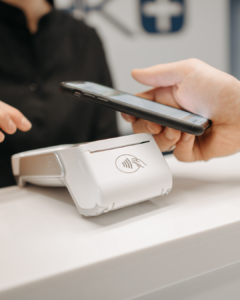
Faster and secure payments with MediRecords’ Stripe integration
 

MediRecords + Stripe

Faster and secure payments with MediRecords' Stripe integration

MediRecords now integrates with Stripe, offering a comprehensive in-app payment solution that simplifies financial workflows for healthcare practices.

MediRecords + Stripe integration

The MediRecords and Stripe integration enables practices to process payments seamlessly within the MediRecords platform, eliminating the need for third-party terminals or platforms.

With secure, PCI-compliant transactions, automated reconciliation, and flexible surcharging options, practices benefit from fast, reliable transactions that streamline financial operations. By consolidating both clinical and financial tasks within the platform, practices can save time, reduce costs, and focus on delivering exceptional patient care. 

This is just the beginning, additional features will continue to roll out to further enhance Stripe’s functionality in MediRecords.

Phase 1 of the MediRecords Stripe integration includes:
Why use Stripe in MediRecords?

MediRecords’ Stripe integration includes a built-in surcharging mechanism, giving practices the flexibility to either pass transaction fees to the payer or absorb them into their rates. MediRecords allows for seamless, one-click payments following consultations or upfront deposits, eliminating delays from direct deposits and reducing the need for follow-ups. While the payment process is handled within MediRecords, patient credit card details are not stored in the system. Instead, they are securely stored within Stripe, ensuring compliance with payment security standards.

Additionally, refunding Stripe payments through MediRecords automatically processes the refund via Stripe, removing the need for manual reconciliation between systems.

Example use cases

GP practice with returning patients: Returning patients can conveniently save their card details to simplify payments during consultations or to facilitate pre-payments or deposits when arranging future appointments.

Clinic with phone bookings: When booking over the phone, practices can take pre-payment for the entire appointment cost as a deposit, which can be allocated to an invoice post-consultation. Cancellations are handled with flexible refund options and penalty invoices.

Travelling patient for a one-time visit: If the Patient is not a usual member of your practice, is travelling for a one time visit, or a current patient that is not comfortable storing card details, the practice can enter the card information at the time of the consultation for a single transaction without needing to store the details.

Already a MediRecords customer? Get set up with Stripe today

To get started with Stripe, setup must be completed by a practice owner. Explore the Knowledge Base for step-by-step instructions, configuration tips, and everything you need to enable payments in MediRecords.

New to MediRecords?

If you want to learn how the Stripe integration can assist you in your practice, book a demo with our Sales team here.

Frequently asked questions

Stripe is a globally trusted payment processing platform that enables businesses to accept and manage online payments securely. Known for its reliability and compliance with industry security standards, Stripe offers fast, secure, and seamless transactions. By integrating Stripe into MediRecords, healthcare practices can process payments directly within the platform, eliminating the need for external terminals and streamlining financial workflows.

MediRecords’ Stripe integration allows practices to process payments within MediRecords without the need for third-party terminals or platforms. Key benefits include: 

  • Secure, PCI-compliant transactions
  • Faster payment processing and automated reconciliation 
  • Built-in surcharging options 
  • Secure patient card storage for one-click payments 
  • Reduced no-shows with pre-payment options 
  • Streamlined financial reporting within MediRecords 

There is no cost to enable Stripe in MediRecords. However, Stripe processing fees apply. Practices have the option to pass these fees to the payer through built-in surcharging or absorb them within their costs. 

No, Stripe offers a standard rate for all customers upon registration. Fees may be negotiable directly with Stripe. If you choose to pass the fees onto the payer, it will cost nothing to you to process payments with Stripe as the fees will be added to the amount that is charged to the payer.

Yes, Stripe has restrictions on certain categories of businesses and practices that cannot use their service.  

If your business falls under one of those listed, it is best to contact Stripe directly to discuss.

No. MediRecords does not store any credit or debit card information. All credit/debit card and cardholder information are sent directly and securely to Stripe, where it is stored within their top-level infrastructure, which is fully PCI Level 1 certified to the highest standards. MediRecords only stores encrypted payer tokens and payment reference numbers and does not retain any other identifiable information in their servers. More information about Stripe security can be found here. 

Yes! During the connection process, simply type in the previously registered email address on the first page and follow the prompts to connect the account This will connect your existing account to MediRecords, and you can retain the previous transaction history within your dashboard. – statics.teams.cdn.office.net/evergreen-assets/safelinks/2/atp-safelinks.html

What a difference the cloud makes – why GPs need to look up when seeking software

What a difference the cloud makes - why GPs need to look up when seeking software

This article was originally published by The Medical Republic and can be viewed in its original format here.


Matthew Galetto - Founder and CEO of MediRecords

 At the recent Wild Health Summit – Towards One Health System, MediRecords hosted a breakfast panel called, “What a Difference the Cloud Makes.” It was a chance to have a real conversation about where general practice IT is headed, and where it should be. 

One of our panellists, Peter O’Halloran, Chief Digital Officer at the Australian Digital Health Agency, was asked a simple question: 

“If you were setting up a general practice today, would you go cloud or on-premise?” 

His answer was unequivocal. Cloud technology is essential. 


The RACGP’s cloud guidance feels out of step 

That’s why it’s a bit jarring to read the RACGP’s own guidelines on cloud computing, which still lean heavily towards on-premise systems and paint the cloud as risky. 

From where we sit, as a healthcare cloud provider working with GPs every day, this doesn’t reflect reality. 

The idea that practices are better off managing their own servers, software, patches, backups, and security just doesn’t stack up in 2025. Most clinics don’t have dedicated IT staff, and even if they do, securing on-prem systems to the same standard as cloud platforms is near impossible. 

Cloud providers like MediRecords deliver: 

  • Continuous updates and security patches, 
  • Encryption by default (at rest and in transit), 
  • Secure, redundant backups, 
  • Access controls, audit logs, and role-based permissions, 
  • Always-on monitoring by specialised teams. 

These aren’t “nice-to-haves”. They’re standard and they’re built in. 

Cloud systems remove the need for older remote access tools like Citrix or RDP, making it easier for teams to connect and get work done. This simpler setup means faster performance, especially with tasks like printing, which are often slow or unreliable on Citrix and RDP due to delays and compatibility issues, with fewer security layers to manage. 


Meanwhile, the government Is Moving Full Steam Ahead on Cloud 

The disconnect is this: the Australian Government has made it clear that the future of digital health is cloud-first, secure, and interoperable. That’s not just a goal, it’s national policy. From the National Digital Health Strategy to ADHA’s recent messaging, it’s crystal clear. 

When asked about security, Mr O’Halloran said cloud technology companies are best equipped to provide these protections. 

Cyber-criminals are highly organised and sophisticated and well advanced of most Australian businesses, he said. 

“You’ve got no hope of trying to keep up to date and keep ahead of the bad guys,” he said. “Putting (your data) in the cloud, if you do it a safe way, it doesn’t guarantee you’re safe, but it gives you a heck of lot more chance.” 

He said the days of running server-based systems are over; “it’s simply not safe”. 

What about costs? 

Costs of switching to cloud technology can be largely offset by reductions in hardware and utility costs but Mr O’Halloran applied a different lens. “Quite frankly, in most cases, the cost of not (transitioning to the cloud) is far worse when something goes wrong.” 

Dated advice 

When we asked the RACGP to consider updating their guidance that cloud technology may introduce “increased potential for data breaches”, we were told they’re happy with the current version. That’s disappointing, not for us as a vendor, but for the GPs who rely on accurate, forward-looking advice from their peak body. 

Time to call it like it is 

The truth is, we’re well past the point where this should be up for debate. Cloud isn’t a risk, it’s the solution to the risks we’ve seen time and time again with outdated, localised infrastructure. 

It’s safer. It’s more scalable. It is more user friendly for your workforce and supports better patient outcomes. And it’s what the rest of the health system is already moving towards. 

We owe it to our clinicians, and our patients, to move the conversation forward. 


About the author: 

Matt Galetto is the founder and CEO of MediRecords, Australia’s first true cloud practice management system and electronic health record. Matt has extensive experience in data analytics, healthcare, banking and hospitality technology. 

 This article was written by MediRecords CEO & Founder Matthew Galetto, and originally published by The Medical Republic. The original article can be viewed here.

New Prescribing role for nurses: What you need to know
 

New prescribing role for nurses: What you need to know

More nurses will be able to prescribe pharmaceutical medicines from September in a move that aims to ease the pressure on GPs.

Not all registered nurses will be granted prescribing authority, and those who complete the required training and registration process are allowed to prescribe 2, 3, 4 and 8 medicines only within a “formal prescribing partnership” with an authorised prescriber, such as a doctor. 

The new Registration Standard, Endorsement for Scheduled Medicines – Designated Registered Nurse Prescriber, was approved by health ministers last December and is part of ongoing national health workforce reform aimed at:

  • Improving access to healthcare, particularly in rural and remote communities or other settings where there are doctor shortages.
  • Expanding the scope of practice for experienced registered nurses.
  • Reducing pressure on GPs and the broader healthcare system. 
 
“This is a landmark moment for Australian nursing,” said Nursing and Midwifery Board of Australia (NMBA) Chair Ajunct Professor Veronica Casey. “We’re inviting the entire health community to join us on this journey.”

The standard was published last month to give stakeholders time to prepare for the change. 

Help for nurses to understand and meet the endorsement requirements can be found in the NMBA’s fact sheet and guidelines.

Help for Customers:

As these changes come into effect, MediRecords is ready to support your team. If you have registered nurses who will be endorsed to prescribe, their licences will need to be upgraded to enable prescribing functionality. This ensures appropriate access and compliance within MediRecords.

Your Customer Success Manager can walk you through the upgrade process, including any associated costs, and help ensure everything is in place before implementation begins in September. We’re here to make the transition simple and seamless. 

Frequently asked questions

The Registration standard: Endorsement for scheduled medicines – designated registered nurse prescriber can be found here on the NMBA website. 

A nurse practitioner has a master’s degree and can work independently to diagnose, treat, and prescribe. A designated RN prescriber has extra training and can prescribe, but only in partnership with a doctor or authorised prescriber. 

An RN must meet all requirements outlined in the official Registration Standard, including, but not limited to,  

  • Completing an NMBA-approved prescribing course (or equivalent study); 
  • Have at least 5,000 hours of clinical experience within the past six years; and,  
  • Hold general registration with no relevant conditions or undertakings. 

After gaining endorsement, the RN must work within a formal prescribing partnership (e.g. with a doctor) and complete a six-month clinical mentorship when they begin practising as a prescriber. See also the Guidelines for registered nurses applying for and with the endorsement – designated registered nurse prescriber on the NMBA website. 

Schedule 2, 3, 4 and 8 medicines, but only within a formal prescribing partnership with a doctor or authorised prescriber. 

We can help upgrade your clinical licences to include prescribing capabilities and integrate nurse prescribers into your workflows. 

To ease pressure on GPs, improve access to care (especially in rural/remote areas), and expand the scope of experienced nurses. https://311c8c13-e8fa-458a-8ce9-cb6970285a50-00-21k1ms2jzdz98.picard.replit.dev/

Sources