HepLink Launches Using MediRecords to Expand Hepatitis C Care
March 30, 2026
Media Release
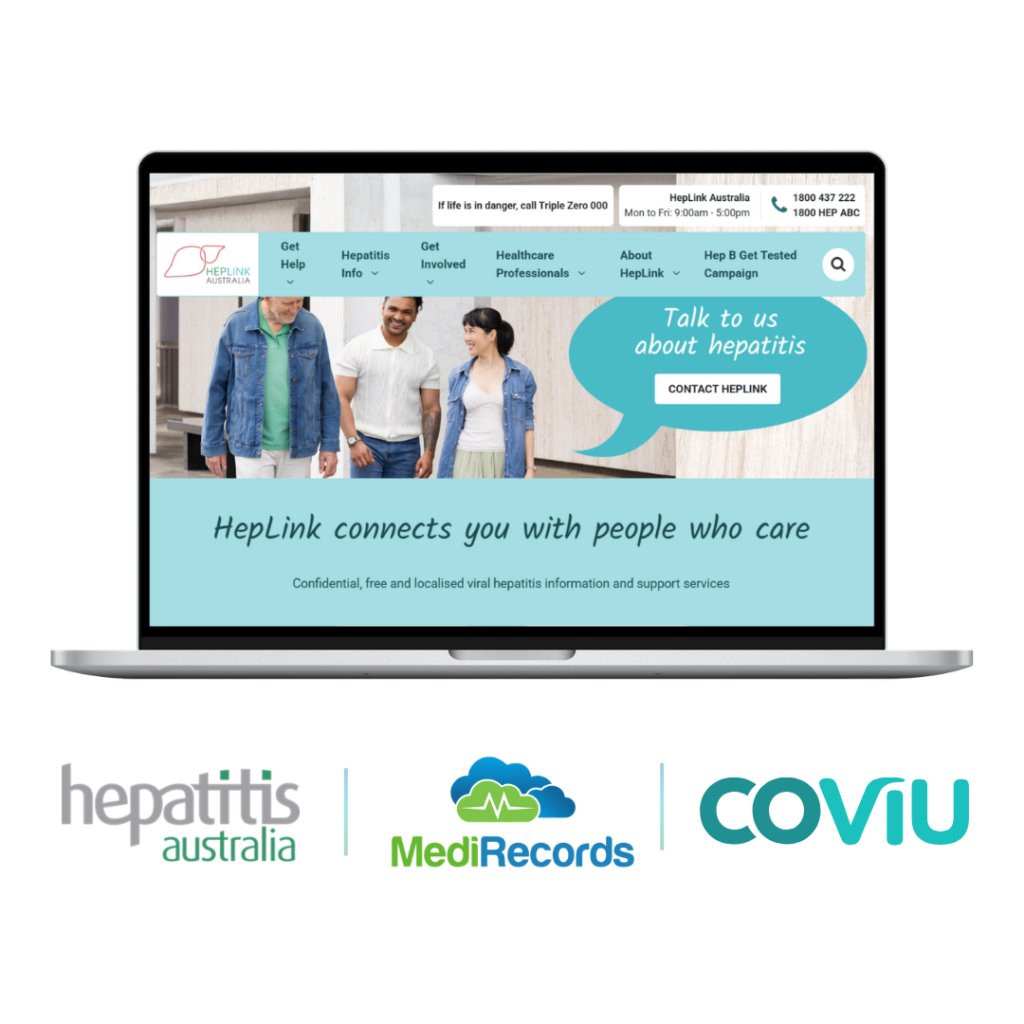
Hepatitis Australia has launched a new national telehealth service designed to deliver unprecedented access to hepatitis C testing and treatment, helping Australia move closer to eliminating hepatitis C as a public health threat.
The service forms part of HepLink, the national hepatitis information and linkage service, and allows people anywhere in Australia to connect with trained nurses, streamlined care pathways, and rapid access to treatment via telephone and virtual care.
Powered by MediRecords’ secure cloud technology and the Coviu telehealth platform, HepLink enables Australians to receive testing guidance, arrange blood tests, access clinical consultations and, where appropriate, receive prescriptions for curative hepatitis C treatment, without needing to attend an in-person appointment.
Hepatitis Australia CEO Lucy Clynes said the new service builds on the extraordinary progress Australia has made since hepatitis C cures were made widely available through the Pharmaceutical Benefits Scheme in 2016.
“More than 100,000 Australians have now accessed treatment and almost 100,000 have been cured of hepatitis C. That is one of the most significant public health achievements in a generation.
But around 63,000 Australians are still living with hepatitis C and many are unaware they have it or are not currently connected to care. HepLink helps close that gap by making testing, treatment and expert support easier to access from anywhere in the country.”
Lucy Clynes, Hepatitis Australia CEO
Digitally enabled care pathway
The HepLink telehealth service is supported by secure cloud-based clinical technology from MediRecords and its Engage patient portal, integrated with the Coviu telehealth platform and AI Scribe technology, enabling an end-to-end digital care pathway for patients.
Through the system, nurses and clinicians can securely manage patient records, share information and education materials, arrange testing, conduct telehealth consultations and issue ePrescriptions where appropriate.
This digitally enabled workflow allows people to move from their first enquiry to treatment initiation through a streamlined virtual care model — removing barriers for those who may struggle to access traditional health services.
Alongside Canada, Australia is now among the only countries to offer a nationwide telehealth service of this kind.
HepLink also supports general practitioners who may be unfamiliar with hepatitis C treatment, offering guidance and referral pathways to ensure patients are not left untreated.
MediRecords CEO Matthew Galetto said digital health platforms play a critical role in expanding access to care for people who may otherwise fall through the cracks.
“Digital care models are essential to reaching patients who may not present through traditional healthcare pathways,” Mr Galetto said.
“By supporting HepLink with secure cloud infrastructure and integrated telehealth capability, we’re helping enable a scalable national approach to hepatitis C care.”
Matthew Galetto, MediRecords Founder and CEO
Supporting Australia’s elimination goal
Australia has made major progress toward eliminating hepatitis C since the introduction of direct-acting antiviral treatments in 2016.
Since then:
The number of Australians living with chronic hepatitis C has fallen by more than 60 per cent
Deaths among people living with hepatitis C have declined significantly
Almost half of treatments are now prescribed in primary care settings, improving access across the country.
However, treatment rates have slowed in recent years as remaining patients are harder to reach.
HepLink is designed to reconnect those individuals with care by providing confidential, easy-to-access support and clinical guidance.
Ms Clynes said initiatives like HepLink will be essential if Australia is to achieve its goal of eliminating hepatitis C.
“We now have the tools to cure hepatitis C quickly and safely,” she said.
“The challenge is ensuring people know about the cure and can access care when they need it. HepLink helps ensure no one misses the opportunity to be tested and treated.”
How to access HepLink
Anyone in Australia can access the HepLink service by calling 1800 437 222 or visiting www.heplink.au.
The service provides:
Information about hepatitis C testing
Support to arrange blood tests
Virtual clinical consultations where required
Access to prescriptions for curative treatment
HepLink is the national hepatitis information and linkage service operated by Hepatitis Australia in partnership with community hepatitis organisations nationally. HepLink is funded by the Australian Government Centre for Disease Control.
The HepLink telehealth service is made possible through a community grant from Gilead Sciences Australia.
MediRecords and Coviu are proud to support this vital healthcare initiative.
Why choosing a Practice Management System shouldn’t be a marriage for life - but neither should it be married at first sight
March 10, 2026
by Tim Pegler
Choosing a Practice Management System (PMS) is not a decision to take lightly.
Like a significant other, a PMS needs to be dependable, adaptable, and easy to spend time with. It should be open to growth, including making new connections. It should not be stuck in the past.
However, for time-poor clinicians their clinical software is all too often a set and forget decision. It’s the equivalent of ‘til death do us part’ (or the servers need replacing). Until then, inertia wins the day.
Fortunately, Australian healthcare is at a crossroads. There’s never been a better time to review technology partnerships, following Federal Government confirmation the future of healthcare is cloud-first and FHIR-enabled.
This doesn’t mean it’s time for a software swingers party or a married at first glance impulse buy. Migrating to a new Practice Management System can be complicated. Here are six things to consider carefully if you’re ready to reconsider your pairing:
1. Technology is evolving. Your PMS needs to keep pace
The Federal Government preference for cloud-hosted technology with FHIR (Fast Healthcare Interoperability Resources) connectivity is pragmatic and based on worldwide trends. There are rising expectations for data to be shared from Primary (e.g. GP) to Tertiary (e.g. hospital) care organisations in real time because communication silos create risk. Consumers increasingly expect access to their data – and their doctors – wherever they are. Your technology needs to support this with secure integration to government systems. Ask your vendors:
What security certifications do they have?
Are they conformant with government regulations for prescribing safely?
How often do they release product updates and how easy are these to install?
What’s on their roadmap?
2. Scalability is not negotiable
Growth looks different for every organisation. You might:
Add multidisciplinary teams for holistic, shared care
Expand to multiple sites
Provide a combination of face to face and telehealth care
A scalable PMS accommodates growth rather than impeding it. This is why cloud systems have become the modern standard; they scale effortlessly, securely, and cost effectively.
3. Remote workforces are here to stay
The pandemic changed healthcare forever, resulting in workforce casualisation, proliferation of virtual care services, and teams working from anywhere with Internet access. Your preferred PMS needs to be limber enough to support:
Telehealth consultations
Distributed administrative teams
After hours clinical care
Offsite reporting, billing, and triage
Multilocation collaboration
If your workers are grinding away via legacy remote desktop systems, you’re likely to be losing time, money and team morale.
4. API connectivity is essential
API and FHIR interoperability enable innovation. Look for a PMS technology partner with open, well documented APIs ensuring secure connection with:
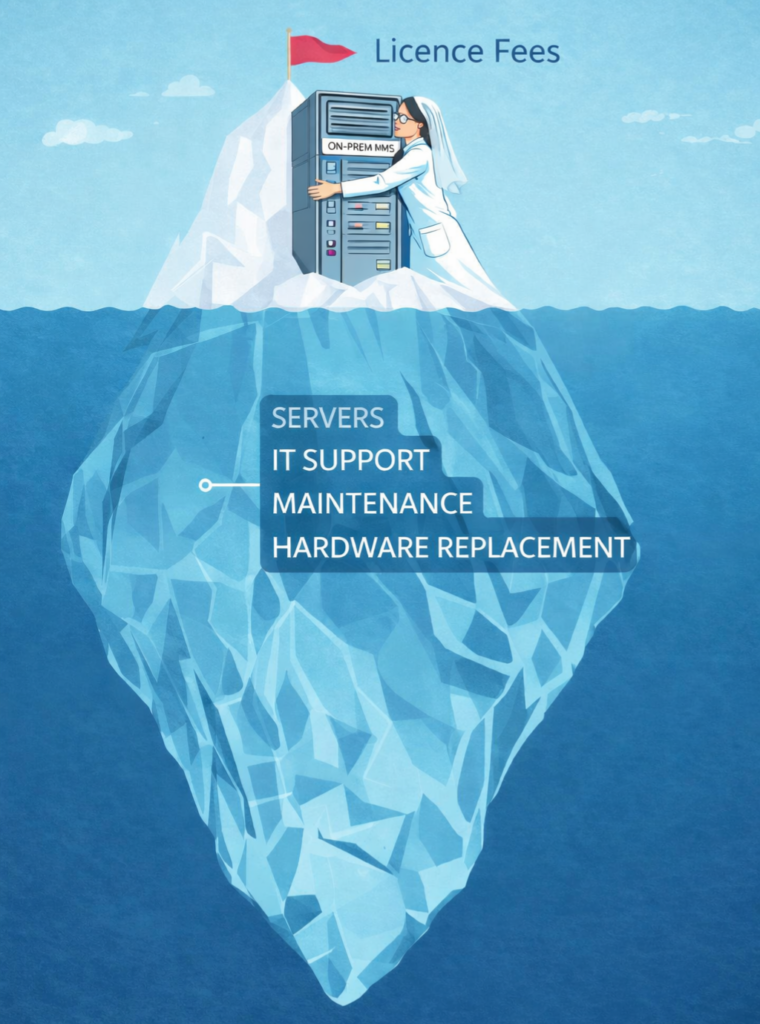
A wedding costs more than a dress, rings, catering and flowers. Factor in photography, suits, vehicle and venue hire, celebrants, music, and so much more. Licence fees for a server-based or hybrid PMS may be attractively low, but you need to budget for desktop downtime and IT support for managing your back-ups, software updates and security patches, not to mention the hardware, building and utilities expenses for owning, running and cooling servers. A server is a short-term investment; you’re committing to $40k or more, each time you replace the hardware. You also need to dispose of it securely and, ideally, sustainably.
Cloud PMS systems mean you can ghost server issues, swipe left on IT contractors and let your technology partner automate software management for you.
6. Where do you see yourself in a decade?
People change. So does the healthcare sector. Hospital-, aged-, and palliative care will increasingly be delivered at home, to maximise patient comfort and convenience, and minimise costs. Can your nursing teams deliver patient care wherever they need?
Actively seek PMS software with the flexibility to satiate new needs as they arise.
If it’s not marriage for life, what is it?
Think of your PMS as a long-term partnership, built on performance, adaptability, and trust.You shouldn’t feel trapped by it. You shouldn’t choose it impulsively. You should feel confident it’sthe right pairing for today and tomorrow. If it’s cloud-based, scalable, FHIR-enabled, and API-driven, that’s a lot of green flags.
Moving forward
If you’re considering opening a new business, MediRecords’ Complete Medical Practice Startup Blueprint provides a comprehensive checklist on things to work through.
If your existing business is looking for a new technology partner, please book a call via [email protected] so we can discuss your requirements.
Opening a medical practice involves more than finding a location and hiring staff. From Medicare compliance to digital health registrations, there are many steps to get right.
We’ve simplified the process into a practical checklist to help you launch a modern, compliant clinic with confidence.