HepLink Launches Using MediRecords to Expand Hepatitis C Care

HepLink Launches Using MediRecords to Expand Hepatitis C Care

Media Release 

Hepatitis Australia has launched a new national telehealth service designed to deliver unprecedented access to hepatitis C testing and treatment, helping Australia move closer to eliminating hepatitis C as a public health threat.

The service forms part of HepLink, the national hepatitis information and linkage service, and allows people anywhere in Australia to connect with trained nurses, streamlined care pathways, and rapid access to treatment via telephone and virtual care.

Powered by MediRecords’ secure cloud technology and the Coviu telehealth platform, HepLink enables Australians to receive testing guidance, arrange blood tests, access clinical consultations and, where appropriate, receive prescriptions for curative hepatitis C treatment, without needing to attend an in-person appointment.

Hepatitis Australia CEO Lucy Clynes said the new service builds on the extraordinary progress Australia has made since hepatitis C cures were made widely available through the Pharmaceutical Benefits Scheme in 2016.

“More than 100,000 Australians have now accessed treatment and almost 100,000 have been cured of hepatitis C. That is one of the most significant public health achievements in a generation. 

But around 63,000 Australians are still living with hepatitis C and many are unaware they have it or are not currently connected to care. HepLink helps close that gap by making testing, treatment and expert support easier to access from anywhere in the country.”

 Lucy Clynes, Hepatitis Australia CEO

Digitally enabled care pathway

The HepLink telehealth service is supported by secure cloud-based clinical technology from MediRecords and its Engage patient portal, integrated with the Coviu telehealth platform and AI Scribe technology, enabling an end-to-end digital care pathway for patients.

Through the system, nurses and clinicians can securely manage patient records, share information and education materials, arrange testing, conduct telehealth consultations and issue ePrescriptions where appropriate.

This digitally enabled workflow allows people to move from their first enquiry to treatment initiation through a streamlined virtual care model — removing barriers for those who may struggle to access traditional health services.

Alongside Canada, Australia is now among the only countries to offer a nationwide telehealth service of this kind.

HepLink also supports general practitioners who may be unfamiliar with hepatitis C treatment, offering guidance and referral pathways to ensure patients are not left untreated.

MediRecords CEO Matthew Galetto said digital health platforms play a critical role in expanding access to care for people who may otherwise fall through the cracks.

“Digital care models are essential to reaching patients who may not present through traditional healthcare pathways,” Mr Galetto said.

“By supporting HepLink with secure cloud infrastructure and integrated telehealth capability, we’re helping enable a scalable national approach to hepatitis C care.”

 Matthew Galetto, MediRecords Founder and CEO 

Supporting Australia’s elimination goal

Australia has made major progress toward eliminating hepatitis C since the introduction of direct-acting antiviral treatments in 2016.

Since then:

  • The number of Australians living with chronic hepatitis C has fallen by more than 60 per cent
  • Deaths among people living with hepatitis C have declined significantly
  • Almost half of treatments are now prescribed in primary care settings, improving access across the country.

However, treatment rates have slowed in recent years as remaining patients are harder to reach.

HepLink is designed to reconnect those individuals with care by providing confidential, easy-to-access support and clinical guidance.

Ms Clynes said initiatives like HepLink will be essential if Australia is to achieve its goal of eliminating hepatitis C.

“We now have the tools to cure hepatitis C quickly and safely,” she said.

“The challenge is ensuring people know about the cure and can access care when they need it. HepLink helps ensure no one misses the opportunity to be tested and treated.”

How to access HepLink

Anyone in Australia can access the HepLink service by calling 1800 437 222 or visiting www.heplink.au.

The service provides:

Information about hepatitis C testing

Support to arrange blood tests

Virtual clinical consultations where required

Access to prescriptions for curative treatment

HepLink is the national hepatitis information and linkage service operated by Hepatitis Australia in partnership with community hepatitis organisations nationally. HepLink is funded by the Australian Government Centre for Disease Control.  

The HepLink telehealth service is made possible through a community grant from Gilead Sciences Australia.  

MediRecords and Coviu are proud to support this vital healthcare initiative.

Media Enquiries

Hepatitis Australia: Darren Rodrigo, 0414 783 405 

MediRecords: Matthew Galetto, CEO, [email protected], 0407 374 910

Coviu: Diana Pitts, CEO, [email protected], 02 7908 1346

What are the keys to embedding telehealth into your practice?

What are the keys to embedding telehealth into your practice?

A new US study has identified reasons that some primary-care practices were better able than others to adapt to the surge in the demand for telemedicine during the pandemic.

We wanted to know if the Australian experience was the same, so we asked our telehealth partner, Coviu.

The study of 87 US practices, in the Annals of Family Medicine, found key factors were:

  • Prior experience with virtual health, such as knowing the importance of grouping telehealth visits together; and
  • Triaging rules, that is, clearly or not clearly knowing which patients could be treated virtually and which required an in-person visit 

Coviu observed during the pandemic that primary-care practices, boosted by the rapid introduction of universal Medicare reimbursements for phone and video telehealth, were quick to adopt phone for telehealth, but were more reluctant to adopt video telehealth, according to CEO Silvia Pfeiffer.

“This has remained the major approach to telehealth in primary care,“ Dr Pfeiffer said.

“This trend persists despite the government’s push for the adoption of video and compelling evidence suggesting that, for many visits, video results in better outcomes than phone calls.

“But for many primary-care services, phone telehealth is completely adequate, and for many patients without connectivity, phone is the only telehealth option.”

Coviu confirmed that practitioners throughout the Australian healthcare system demonstrated greater adaptability to telehealth when it was already integrated into their practice model, such as in rural settings, or when it was part of their pre-pandemic strategy.

“The absence of clear and consistent triage guidelines, especially early in the pandemic, contributed to the challenges faced by healthcare providers,” Dr Pfeiffer said.

“Triage guidelines help determine which patients should receive in-person care, telehealth consultations, or home care, and their absence can lead to uncertainty and increased workload for clinicians.”

She said when initially adopting telehealth during the pandemic, primary-care practitioners faced significant challenges including “unmet basic requirements, such as the absence of webcams or sufficiently powerful computers for telehealth”.

“In addition, many GPs lacked adequate training on what could be accomplished through video telehealth.”

Today, obstacles to wider adoption of telehealth include, “the stigma associated with video consultations, particularly among practitioners accustomed to in-person care”, Dr Pfeiffer said.

“Slow change management within healthcare organisations hinders progress, with a perception that video visits are inferior to in-person appointments, which does not apply in all instances. For example, mental health advice often leads to better outcomes when delivered via video in the comfort of a person’s own home.

“Reimbursements are still a challenge as the rules continue to change, causing confusion.

“Misinformation about privacy and security concerns as well as regulatory requirements also loom, impacting patient trust.

“Furthermore, inadequate training, both in technical software use and determining the clinical appropriateness of remote consultations, remains a hurdle.”


Factors Coviu says lead to successful telehealth adoption include:

  1. Digital knowledge within practices that already had digital communication mechanisms set up with their clients.
  2. Practices that strategically integrated telehealth into their workflows and adopted technology to make this seamless
  3. Practices that prepared their staff with training on their virtual-care workflow
  4.  Adoption of triaging rules by clinicians, as proposed by industry experts such as the RACGP, and other industry bodies and federations.

MediRecords has partnered with Coviu to streamline booking of video consultations with practice clients. Once your Coviu account is connected to MediRecords, any consultation nominated as a telehealth appointment auto-generates a link to the Coviu virtual consultation and your client is sent an invitation via SMS or email.

MediRecords and Coviu are both Australian developed cloud-hosted health technology companies.

Read more about Coviu on their website

Looking to stay updated with the latest from MediRecords?

Sign up to the newsletter

    Innovation that takes the stigma out of STI testing
     

    Innovation that takes the stigma out of STI testing

    Approximately 30,000 Australians are using a revolutionary service that saves them from awkward face-to-face conversations with doctors about sexually transmitted infections

    The service, Stigma Health, is part of Australia’s largest sexual health network specialising in online STI testing. And it uses MediRecords for patient records, appointment management, Medicare claiming and more.

    Stigma Health eliminates embarrassment by removing the need for in-person clinical consultations and allowing consumers to get a non-confrontational STI-test pathology referral online then take it to any of the 10,000 pathology collection centres Australia-wide.

    Australian data shows that one in 25 people aged 15-29 had chlamydia in 2021, but fewer than one third received a diagnosis. Additionally, 2,630 Australians are unknowingly living with HIV. Reluctance to be tested is likely to contribute to these statistics.

    Stigma recommends STI testing whenever people have a new sexual partner — or every three months.

    Founders James Sneddon and Dr. Mitchell Tanner believe strongly in the power of new technology for the greater good.

    “We use MediRecords as it is a cloud solution, which is fantastic for our remote workforce,” the CEO, Mr Sneddon, said.

    “Further, the MediRecords app is the most secure way to communicate and share results with our patients.

    “The SMS-on-demand feature is also a fantastic communication/notification tool.”

    Stigma Health has recently introduced telephone and video appointments.

    “We are managing these with MediRecords appointments and the COVIU video platform, Mr Sneddon said.

    “These appointments also carry Medicare claiming, which is simple with the MediRecords platform.”

    “In my role as CEO of our group of clinics, MediRecords allows me operational transparency to understand our capacity, our efficiency and, best of all, our outcomes.

     “MediRecords’ facilitation of APIs and working towards keeping their system open and able to integrate is of huge value to our organisation,” Mr Sneddon said. 

    Legal drug testing

    In a world first, Mr Sneddon and Dr Tanner have also started harm-minimisation telehealth testing service for users of anabolic androgenic steroids (AAS) & performance and image-enhancing drugs (PIEDs).

    Also supported by MediRecords software, the service, Roidsafe, is a legal, judgment-free platform.

    “Many steroid users rely on ad-hoc information from other users within their community,” the site noted.

    “Regular Roidsafe testing gives you insight into how your body functions pre, during and post-cycle, so you can make informed decisions.”

    It tests liver and kidney function, cholesterol levels and a range of hormone levels.

    “Our platform is 100% confidential and more affordable than making multiple visits to your GP to gain a referral, plus follow–up appointments to get your results,” Roidsafe stated.

    “Getting tested with us is easy. We deliver your online referral, you get tested at a local pathology clinic, and your results will be sent securely to your mobile phone.”

    Read more about Stigma Health on their website

    Looking to stay updated with the latest from MediRecords?

    Sign up to the newsletter

      Untapped potential: Hybrid care benefits remain overlooked post-pandemic

      Untapped potential: Hybrid care benefits remain overlooked post-pandemic

      Hybrid care — that is the mixed delivery of in-person and telehealth consultations by a clinic — is decreasing in Australia, according to leading telehealth platform Coviu.

      “This compares to a continued increase in the use of self-paid telehealth consultations with online-only GP services,” Coviu CEO Silvia Pfeiffer said.

      “The recent introduction of GP telehealth services by Woolworths for a fixed $45 rate is a clear example demonstrating what consumers want, but what their own GPs may not be delivering.”

      “While hybrid care is deemed the future of healthcare, we seem to be going in a direction where we are facing a segmentation of the industry into technology-only service providers and technology-averse service providers.”

      For hybrid care to function successfully, new reimbursement models and new models of care are necessary, Dr Pfeiffer said.
      Currently, most practitioners favoured the in-person attendance of patients, and patients did not feel empowered to ask for telehealth consultations, she said.

      “In a situation of clinician shortage where brick-and-mortar clinics have sufficient in-person patient traffic, there is very little incentive for the adoption of telehealth.

      “This will unfortunately lead to a continued reluctance of the adoption of hybrid care [and] lead to patients turning their backs on their own local GPs, instead seeking telehealth services from online-only providers.

      “This cannot be a desirable future.”

      Coviu’s position is that today’s Medicare reimbursements for telehealth consultations, “certainly are not designed to encourage the use of telehealth”, requiring an in-person visit at least once a year before patients become eligible for telehealth consultations.

      “This creates extra administrative burden on the practice, even discouraging practice administrators from offering telehealth consultations to patients,” Dr Pfeiffer said.

      “Better training and better triage rules for healthcare professionals, practice managers, administration staff, and nurses would certainly help to empower the industry with better telehealth capabilities.

      “It would address the technical capabilities gap in healthcare, the reluctance to video telehealth adoption, and facilitate necessary changes in patient pathways.”

      MediRecords has partnered with Coviu to streamline booking of video consultations with practice clients. Once your Coviu account is connected to MediRecords, any consultation nominated as a telehealth appointment auto-generates a link to the Coviu virtual consultation and your client is sent an invitation via SMS or email.

      MediRecords and Coviu are both Australian developed cloud-hosted health technology companies.

      Read more about Coviu on their website

      Looking to stay updated with the latest from MediRecords?

      Sign up to the newsletter

        Great New Features Added in 2019

        Great features added in 2019

        Great New Features Added in 2019

        Great features added in 2019
        Matthew Galetto MediRecords banner

        Matthew Galetto

        Here’s a sample of a few of the great new features we added to MediRecords in 2019…

        Patient Engagement

        TeleHealth

        Telehealth Consultations

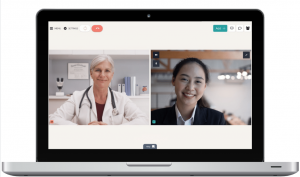
        MediRecords partners with Coviu to deliver a seamless Telehealth Consultation experience for providers and patient’s. Begin from the appointment book or waiting room.
        2 Way SMS

        2 Way SMS & Email

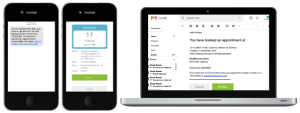
        Patient’s can confirm appointments direct from an SMS or Email appointment reminder. Updates are then reflected in your practices appointment book in real-time.

        Improvements to your day

        Simplified Claiming

        Simplified Claim Resubmission

        Resubmitting a failed claim has never been simpler. MediRecords users can now edit and resubmit rejected invoices directly from the claiming dashboard.

        The originally failed invoice is archived and the appropriate adjustment made.
        Appointment Enhancements

        Appointment Enhancements

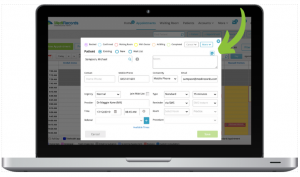
        MS’ sent from the appointment book can now be non appointment related. You can free text the content or simply select another SMS template to be used.
        Your SMS balance is now visible from this screen so you can text and send with confidence.

        Partners & Integrations

        Clinivid Logo
        In August this year, MediRecords partnered with Clinivid to provide a secure alternative for mulotidisciplinary care teams to communicate, share advice and files for improved holistic patient care.
        StanfieldIT

        Stanfield IT

        MediRecords partnered with Standfield IT in September to help practices leverage the best technology has to offer and bring their entire practice operations to the cloud. No more servers, no more paper just 100% pure cloud
        Matthew Galetto MediRecords banner

        Matthew Galetto

        Looking to stay updated with the latest from MediRecords?

        Sign up to the newsletter